
The Irish government has ramped up its hostility towards safer nicotine products by approving new legislation to further tighten restrictions on vapes and nicotine pouches. Though the announcement is confusingly worded, the bill threatens to ban vape flavors.
The Public Health (Tobacco Products and Nicotine Inhaling Products) (Amendment) Bill 2026 was approved by government ministers on March 3. “It will now be brought forward for enactment,” stated a March 4 press release.
Besides banning sales of products such as pouches to under-18s, the bill would ban advertising of vapes and pouches, ban point-of-sale displays in stores other than specialized vape shops, and “restrict colors and imagery” on devices and packaging, among other measures.
“I welcome the approval of Government to bring these important public health measures forward for enactment,” said Minister Murnane O’Connor. “We are dealing with an increasingly aggressive industry marketing attractively packaged addictive products that appeal to children. We are responding strongly with measures that will protect our young people against current and future threats.”
What remains unclear is the extent to which the bill would restrict vape flavors.
“The only thing that is clear is that they don’t know what they intend to do other than ban stuff.”
The government’s announcement simultaneously said it will, “Prohibit all flavor descriptors and language other than basic flavor names for nicotine inhaling products,” and that it will, “Limit flavors in nicotine inhaling products to tobacco with power to make changes by regulation.”
The second of those measures would appear to make the first redundant.
“It seems strange, given the plan to ban all flavors except tobacco, that there should be any need to cite basic flavor names,” Dr. Garrett McGovern, an Irish addiction medicine specialist and tobacco harm reduction (THR) advocate, told Filter.
Tom Gleeson is a trustee of the New Nicotine Alliance Ireland charity, and personally quit smoking using vapes. He also called the press release “not just unclear, but downright confusing and contradictory.”
“The only thing that is clear,” Gleeson told Filter, “is that they don’t know what they intend to do other than ban stuff.”
Should the legislation translate to a complete ban of non-tobacco vape flavors, evidence points to damaging outcomes—including for the youth the measures are ostensibly designed to protect.
A United States study, for instance, looked at almost 400,000 young adults. It showed that although there was a reduction in vaping in states with vape flavor restriction, there was a 2.2 percentage-point increase in daily smoking compared to trends in other states, which would result in net public-health harms. Other research has highlighted similar effects.
Older adults smoke at higher rates than youth, and risk being dissuaded from switching—or, if they already vape, prompted to switch back. Another recent study found that in Canadian jurisdictions where vape flavors were banned, overall cigarette sales jumped by nearly 10 percent.
“There is a considerable body of evidence showing that flavor bans result in an uptick in smoking. This proposed legislation has not been thought through very well, in my opinion.”
“There is a considerable body of evidence showing that flavor bans result in an uptick in smoking prevalence,” Dr. McGovern said. He added that flavors are a “critical component to the vaping experience” and are often cited as a key reason people find vapes helpful for smoking cessation.
“This proposed legislation has not been thought through very well, in my opinion,” he continued. “In truth, youth will not be protected as e-cigarettes use is likely to be displaced by smoking and/or exposure to a dangerous black market that will open to fill a void.”
The latest announcement follows other anti-THR policies that now form part of Ireland’s tobacco control policy landscape.
In November 2025, Ireland imposed a high taxation rate of €0.50 per milliliter for e-liquids, regardless of whether they contained nicotine. This means vapers in Ireland are taxed harder than those in any other European Union country, greatly reducing people’s incentive to choose safer options. The measure had previously been “rammed through” the EU notification process in a way that avoided public consultation.
Around the same time, ministers voted to ban disposable vapes—which serve as low-barrier options for many people who smoke—citing environmental concerns and, once again, youth vaping.
Ireland fell woefully short of the government target of a smoking rate below 5 percent by 2025. The country’s smoking rate today is estimated at 18 percent.
From 2016-2019, Ireland saw a significant drop in smoking, and 38 percent of people who quit smoking were reportedly using vapes to do so. But the 2019 “EVALI” outbreak in the US, misattributed to nicotine vapes, marred the image of vaping around the world. Irish vape use declined, helped by health authorities spreading misinformation.
“We warned that any restriction would affect smoking rates, and it seems that the tax applied last year is having that effect,” Gleeson said. He expects that reducing the visibility and variety of vapes under the new bill “will only exacerbate this.”
Gleeson blames the huge influence of the World Health Organization and Bloomberg-backed NGOs for fanning enthusiasm for restrictions—enthusiasm that has caught on among Ireland’s political leaders.
“The government might feel this is just a ban on flavors. But in fact, it is a total ban on a sector that helps people quit smoking.”
Based on ministers’ anti-THR rhetoric and policies, he said, he can only conclude they’re on a mission to increase smoking in Ireland. “We went for a 100-300 percent tax,” he noted, “when even the Irish Heart Foundation warned against a tax of more than €0.10 per milliliter because it would increase smoking and inhibit quitting.”
Immediate economic consequences of the new bill would include unemployment and reduced tax revenues, according to Joe Dunne, a spokesperson for the Reduced Risk Products Association, which represents Ireland’s independent legal vape shops.
“Overall, from a business point of view, a ban on all flavors apart from tobacco will result in the end of the legal vaping businesses,” he told Filter. “They cannot survive with a tobacco-only product and this will see the majority of stand-alone vape stores close their doors.”
That would have the knock-on effect of further reducing people’s legal access to vapes. A chilling effect, too, is likely to result from the message sent by removing vape and pouch displays from mixed-retail shops and introducing plain packaging—reinforcing public misperceptions about relative risk.
Down the line, the economic cost of greater health care expenditure if more people continue to smoke will also be substantial. The human cost of smoking in Ireland is about 5,000 premature deaths per year.
“The government might feel this is just a ban on flavors,” Dunne said. “But in fact, it is a total ban on a sector that helps people quit smoking.”
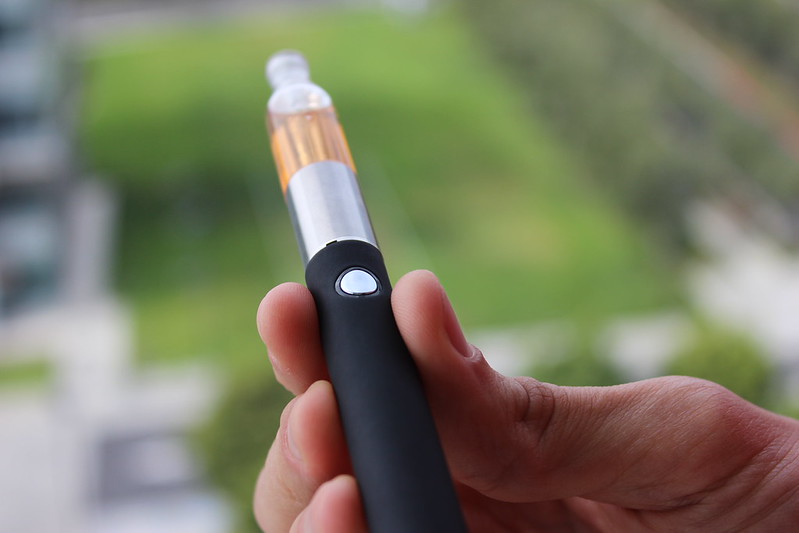
Photograph by Lindsay Fox via Flickr/Creative Commons 2.0