

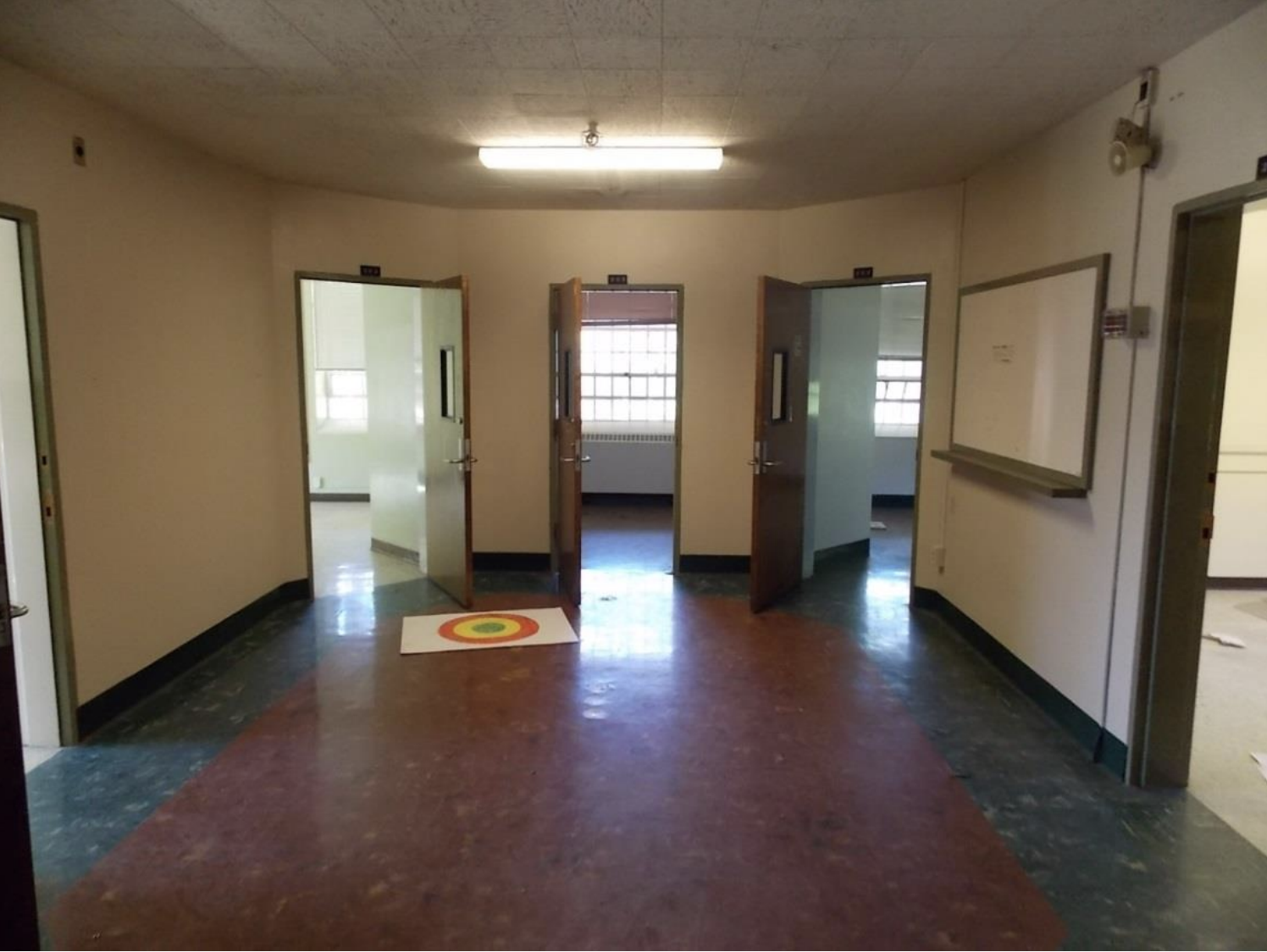
For the past 16 years, Georgia was under a federal injunction: It could not build any state-run psychiatric hospitals, because it was supposed to be investing in community care. But instead, county jails prevailed as the biggest dumping grounds for people with developmental disabilities or those in acute mental health crisis. Now, community-based services are still underresourced and the state is planning to build a $409-million psychiatric hospital.
The 2010 injunction was the result of a civil-rights reckoning, with hospitals that were synonymous with death and neglect rather than care. In 2007, an Atlanta Journal-Constitution investigation into the state’s psychiatric hospitals revealed that over the previous five years, more than 100 patients had died as a result of neglect, abuse or the quality of medical care.
A series of Department of Justice investigations and litigation followed, and by 2010 the state had agreed to multiple sweeping settlements. It was no longer permitted to admit people with developmental disabilities into state hospitals, and forced to begin transitioning current patients to community care. As part of a consent decree for the DOJ to oversee the Department of Behavioral Health and Developmental Disabilities (DBHDD), the state was banned from building new state-run psychiatric hospitals.
In February 2026, the federal government terminated the consent decree and remaining settlement provisions. A proposal for the first state-run psychiatric hospital to be constructed in more than 60 years was immediately added to the state budget, with strong support from local law enforcement. The Senate approved it 49-1. On March 3, Governor Brian Kemp (R) signed the amended budget into law, clearing the way for the new Georgia Regional Hospital in Atlanta. As a forensic mental health hospital, it will receive people being detained for court-ordered evaluations. Construction is expected to take two to three years.
“For 16 years, our teams, providers and partners have worked tirelessly to strengthen and transform Georgia’s behavioral health system,” DBHDD Commissioner Kevin Tanner stated in February when federal oversight was lifted. “This ruling reflects the extraordinary progress we have made in expanding access, improving quality and building a more comprehensive continuum of care. Most importantly, it represents better outcomes and greater independence for the individuals we serve.”
The hospital will have 300 forensic psychiatric beds. In January, the DBHDD had estimated a need for 800 such beds, projecting that by 2034 the state would run out.
The state did implement many of these changes, but others, like housing vouchers, were never fully realized.
The consent decree and other DOJ actions were more than just a demand for cleaner facilities and better staffing ratios, but a rebuke of the entire system. On paper this meant a pivot from state-run asylums to dozens of community support teams; crisis stabilization teams, including mobile crisis response; peer services; wraparound services for housing and employment. And the state did implement many of these changes, but inevitably others were never fully realized. Housing vouchers, for example—patients were still being discharged from hospitals into shelters. Jails were housing people who had not been booked on violent charges, but kept bottlenecking in custody nonetheless.
“They don’t need to be in jail, but there’s no place to take them. It’s very frustrating,’’ Bill Hallsworth, jail and court services coordinator for the Georgia Sheriffs’ Association, told the Georgia Recorder in 2020. “A lot of them are good folks but they have a hard time getting along in the community.’’
County jails became the largest de facto mental health institutions in the state, housing anyone too visibly ill or disabled or simply too poor to land anywhere else. Republican senators are now treating the end of the consent decree as the lifting of a 16-year prohibition, proclaiming that it’s Georgia’s jails, rather than its citizens, that have been unduly burdened.
Many a prisoner in the Georgia Department of Corrections system, where I’ve been incarcerated for over three decades, has told me stories of a metro police officer dumping them at a county hospital that might have available beds, or sheriff’s deputies in rural counties driving them to an urban clinic for the same reason. No state or local department had the infrastructure to receive them—other than GDC of course, where more than 1,700 people have died since 2020.
GEO Group and the contractor PACs are certainly seeing good returns on their political donations. Even before the new $409-million forensic hospital, Kemp had already pushed through a $436-million investment to build a 3,000-bed “mega prison,” and these two new facilities won’t be the last. Kemp, who has served as governor since 2019, proudly describes himself as having started his first small business decades ago with a pickup truck and a shovel. It shows.
Image (cropped) via Library of Congress