

In late February, senators in Georgia introduced a bill known as the One Strike Act. Though the name—a riff of sorts on the better-known “three strikes” approach—and marketing imply mandatory life sentences on first-time convictions of the most serious felonies, the bill is primarily about lengthening sentences and removing parole for any and all felonies.
Senate Bill 592 is cosponsored by State Senator Steve Gooch (R), a former senate majority leader and current candidate for lieutenant governor. Gooch, a noted proponent of mass incarceration, was also a cosponsor of the 2024 bill that greatly restricted cash bail—decreasing the number of eligible charges, tightening forfeiture rules and establishing a limit of three bonds per person per year.
“The One Strike Act elevates the penalty for a first-time violent felony to life in prison without parole,” Gooch stated in a February 27 video posted to social media. “One violent act should be enough to remove a predator from our streets permanently.”
The federal government and more than half the states have some version of a “three strikes” law, which typically mandate life in prison on the third conviction of certain felonies. Georgia is one of a handful of states with a “two strikes” law, which it applies to convictions known here as the Seven Deadly Sins (SDS): rape, armed robbery, kidnapping, aggravated sodomy, aggravated child molestation, aggravated sexual battery and murder. For a first-time conviction of an SDS other than murder, the mandatory minimum sentence is 10 years. Murder has a mandatory life sentence on a first-time conviction, and on a second conviction all of them do.
But much of the One Strike Act covers non-SDS convictions.
Perhaps most egregiously, the One Strike Act would remove the possibility of parole for scores of people currently serving parole-eligible sentences.
For example, the mandatory minimums for various circumstances of aggravated assault would be raised from one year to three, from three years to five, from five years to 10, and from 10 years to 20. The maximum for all of them, currently 20 years, would be raised to life.
Perhaps most egregiously, the One Strike Act would remove the possibility of parole for scores of people currently serving parole-eligible sentences. These convictions range from murder to simple assault to drug distribution. Parole would also be removed for anyone determined to have gang affiliations, regardless of conviction. The Act would also restrict eligibility for early termination of parole.
It’s unlikely that everyone eligible for the maximum sentence would be getting it. But raising the mandatory minimums, encouraging sentences that last decades instead of a few years and removing the possibility of parole will only assure more homicides and suicides, staff shortages and ballooning prison budgets.
Places like Buckhead are seeing Atlanta crime spread to their streets thanks to lawless liberals who refuse to hold violent criminals accountable. When I’m Lt. Governor, it’ll be one strike – YOU’RE OUT! Thanks to Buckhead Republicans for letting me share about my One Strike Act! pic.twitter.com/PGIUgM386N
— GoochForGeorgia (@GoochForGeorgia) March 2, 2026
The state prison population began to surge in the 1990s after the “two strikes” law was signed by then-governor Zell Miller, a former parole board member. The budget of course surged too, to $900 million by 2005 and more than $1.8 billion today.
There are already over 10,000 people serving life sentences in Georgia. In 2024, parole was considered for 2,046 of them and granted to just 67. But instead of expanding parole, the state now proposes to erase it further.
There has never been any solid evidence showing that longer prison sentences are a deterrent, and the One Strike Act doesn’t waste time trying to make that argument. It’s about retroactive punishment. But the state cannot manage such an expansion.
Georgia already has among the highest incarceration rates of any state. It’s unequivocally failing to manage its current prison population of approximately 50,000 people, but even a years-long Department of Justice investigation describing these failures isn’t stopping the state from getting more money to build more prisons and incarcerate more people. The One Strike Act would fuel unsustainable growth in an already strained system.
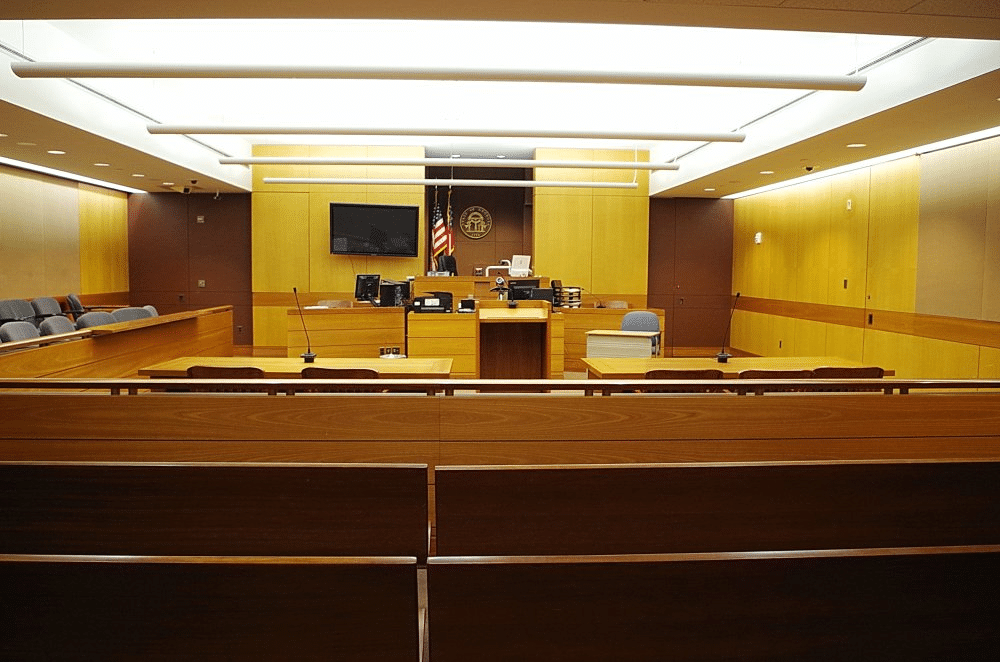
Image via Superior Court of Fulton County