
One of the many controversies around vaping nicotine is the impact on the enviroment—particularly of disposable, single-use vapes.
When this is used as a reason to ban vapes, it’s a pretext. We live in a disposable world where countless products are used just once, from paperboard coffee cups and plastic fast-food containers to balloons. But bans justified by environmental damage, as in Belgium and the United Kingdom, typically target vapes alone. They deny people who smoke access to effective substitutes for deadly cigarettes—which themselves cause substantial environmental damage, but remain available everywhere.
Environmental concerns about vapes are also valid. Most are made of plastic, and contain toxic lithium batteries (also found in electric bikes, scooters, cars, laptops and phones). But the answer isn’t banning lifesaving products, including the disposable vapes that are low-barrier off-ramps from smoking. Instead, it’s the development of more sustainable products, and the creation of free and convenient recycling programs.
These steps can reduce both toxic waste and toxic opposition to tobacco harm reduction.
Kathryn Walker is the executive director of the Center for Sustainable Materials Management. She’s currently working with the Product Stewardship Institute to launch a pilot vaping-device collection program in New York State. Filter’s interview with Walker has been edited for length and clarity.
Helen Redmond: Why is it important to properly dispose of vaping products?
Kathryn Walker: The major piece on the safety side of things is the lithium batteries that a lot of vapes contain. When you throw that vape into the garbage, that garbage is being handled by either a municipal or private hauler and then being taken to a facility. And fires can either happen at those facilities. We’ve seen a couple of instances of fires within the actual hauling truck. So there is a fire risk as a result of the batteries that these containers hold. Many of them are putting together fireproof boxes to hold these materials in.
“One of the conversations we are having is, would Extended Producer Responsibility be a good model for vapes?”
HR: These lithium batteries are found in both nicotine and cannabis vaping products, so you’re talking about the safe disposal of both, right?
KW: Yes. And that’s what makes the project complicated;we’re trying to handle both of those materials. There’s a representative from the Office of Cannabis Management in New York State on our Advisory Committee, advising on the rules and regulations for the cannabis industry. And then we also have representatives from the health departments that are representing nicotine.
HR: What’s the scale of this whole issue in New York?
KW: It’s really hard to get data on how many of these devices are actually ending up in landfills. They are dangerous, and we’re trying to measure this from the sales data. We saw a slight decline in sales when the law was passed in New York that banned flavored nicotine vapes. But we’re seeing that increase again. There’s also an increase in single-use vapes on the cannabis side. So we know that these waste problems are not going to go away, even though it is a tiny product, but there are many of them in New York State.
HR: There are lithium batteries in electric bikes, for instance. How is that handled?
KW: The rechargeable batteries for those products have been added to the EPR law in New York state that the governor just signed at the end of 2025. The EPR, which stands for extended producer responsibility, is a type of legislative tool that environmentalists in the materials world designed many years ago. And what that means is that in the development of a product, the cost of the end life of it is actually put on the producer. So for example, in New York State there is an electronics recycling EPR law which makes it the responsibility of recycling a TV no longer in the municipality—it actually goes back to the producer of that material.
The big EPR law in most states is paper and packaging. Forty percent of our materials in the waste stream are from some form of packaging. The idea is that it puts the onus of the design of this material on the producer to make it more recyclable, to reduce the amount of material, because at the end of life, they would end up paying less of a disposal fee. One of the conversations we are having is, would EPR be a good model for vapes?
“We need to scale this to make sure that there’s more collection sites available to folks … The goal we’re reaching for is to think about how to redesign vapes so that they can be easily recycled.”
HR: Tell me about your current project and its strategies for safe disposal of vaping products.
KW: The first part of this project is forming an advisory committee of waste professionals, fire safety experts, municipal officers, NGO groups, and then the retail and industry stakeholders, to talk about how these collection sites are being managed now. And what we’re seeing is that the responsibility is on the hauler, whether that’s a private or public hauler. They have to deal with this material and they don’t have any funding to do so because budgets are crunched all across the board.
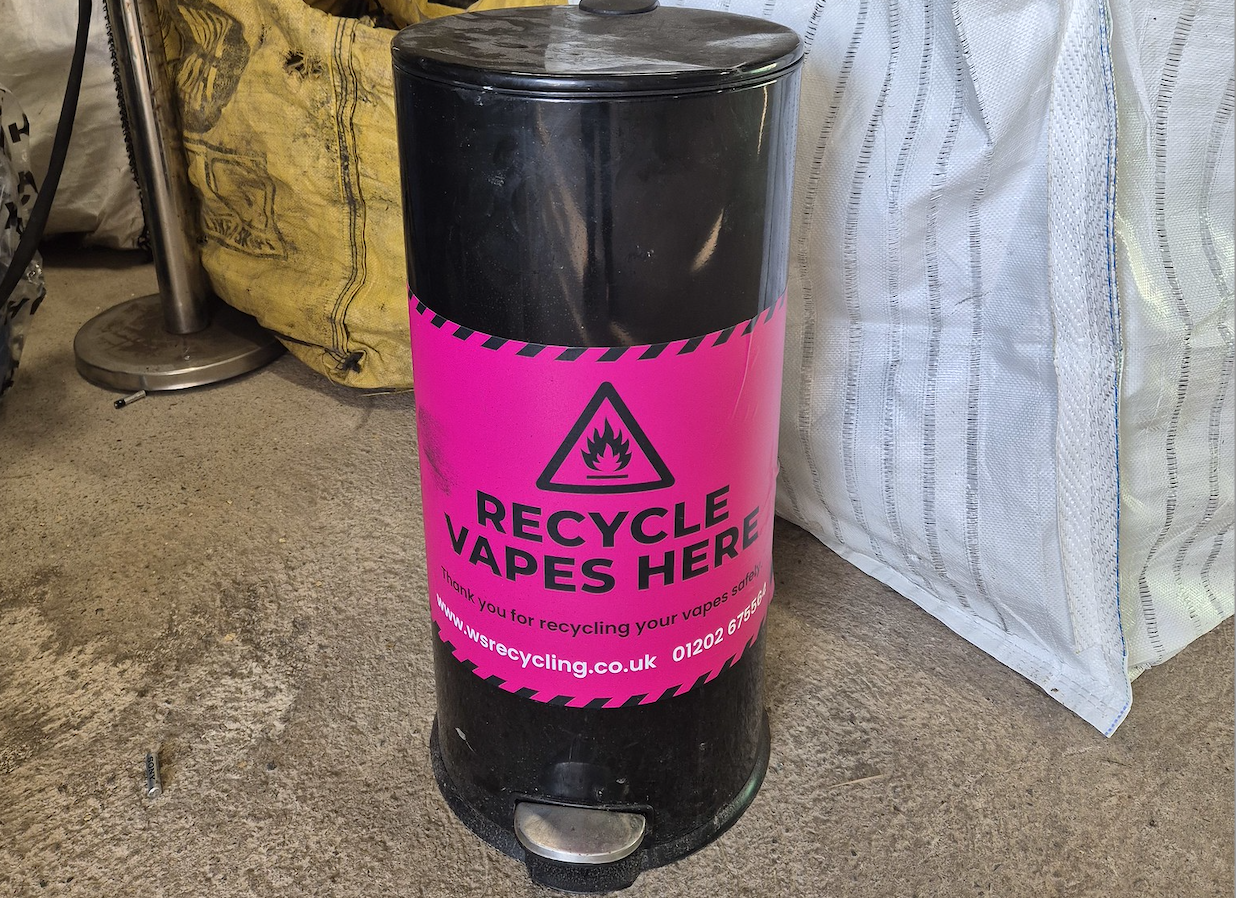
On top of it, most people don’t know the risk that they are causing by throwing their vape into the garbage. So there’s an education and outreach component of these collection processes for sure. That’s the first step: You have to let the consumer know that this is a safety issue. And then the second part is making it convenient. We know with recycling, it’s not going to happen unless it’s a convenient thing. So we need to scale this to make sure that there’s more collection sites available to folks.
One of the models is to create collection sites at the point of sale. So if somebody is going to buy a vape, they could bring their old vape there and put it into a safe container for either incineration or recycling. We’re choosing five communities that have some level of collection already, so we’re not starting from the ground up. We are increasing outreach and education and then the actual physical collection sites, making sure that they’re safe, like putting the vapes in boxes that are fireproof.
Then, once you have this material, what are you doing with it? Because, unfortunately, some devices you can take the battery out very easily, some you can’t. Unfortunately right now, one of the only options for those materials is incineration. So waste-to-energy facilities are going to be the safest thing for those products.
The goal that we’re reaching for is to think about how to redesign these vapes so that they can be easily recycled.
HR: Where will the pilot collection sites be?
KW: I can’t tell you where they all will be, but we’re trying to make sure that we have a variety and a diversity of rural versus urban and communities that have already participated or done disposal activities. I can say we do have some upstate in the Buffalo and Rochester area, and then in New York City.
Photograph (cropped) by Global State of Tobacco Harm Reduction via Flickr/Public Domain