


Michigan, where syringe service programs (SSP) have been rapidly expanding yet operate in a legal gray area, is considering legislation to authorize them. If enacted, the bill would address the discrepancies between state and local “drug paraphernalia” laws that have impeded SSP operations for years.
Senate Bill 0629, introduced October 30, would allow authorized entities to operate a “needle and hypodermic syringe access program for the purposes of distributing sterile needles or hypodermic syringes to individuals or providing additional services, items or equipment” to mitigate the spread of blood-borne disease like HIV and hepatitis C.Participants, staff and volunteers who carry syringes—whether used or new—would be exempt from criminalization under local ordinances that ban so-called paraphernalia. It’s nearly identical to a bill that passed unanimously through the House in December 2024 before stalling in the Senate Committee on Government Operations.
Michigan has no law explicitly authorizing SSP. State law bans equipment associated with “injecting” unregulated drugs, but doesn’t ban syringes or needles specifically. But some localities have passed ordinances that do, and also ban various other harm reduction supplies like fentanyl test strips, which was why local harm reduction groups had rallied around the similar legislation from the previous session.
“Due to inconsistent language in municipal ordinances, there is often confusion and variation in paraphernalia criminalization throughout the state, causing inequities and devastating interruptions to the lives of those affected, even in the absence of prosecution,” the Michigan Drug Users Health Alliance wrote to House representatives in December 2024, in a letter signed by over 100 organizations and advocates. “Provision of safer use supplies is positive for everyone in the community—not only in mitigating the spread of infectious disease, but also in lifting the stigma that isolates people who use drugs. When our laws are unclear, law enforcement officers often take action that further marginalizes people who are most at risk of infectious disease and overdose.”
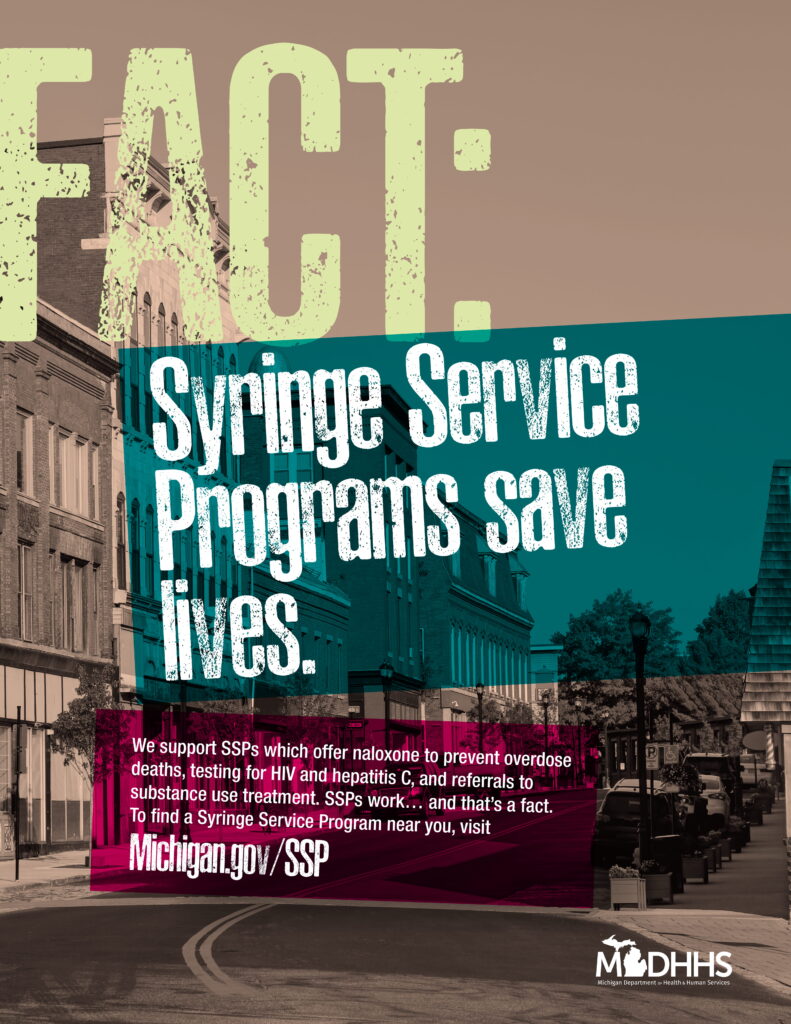
In 2017, the state had just four authorized programs. In 2018, the Michigan Department of Health and Human Services published an SSP implementation guide and began funding an increasing number of programs, especially during the COVID-19 pandemic. As of June, the state has 37 programs operating at around 140 locations. Since late 2018, SSP in Michigan have linked at least 89 people to HIV care, and at least 367 to treatment for hep C.
The new bill is sponsored by Democratic senators Rosemary Bayer, Jeff Irwin and Sue Shink. A separate bill, SB0628, was also introduced October 30 by the same three senators, and would ensure that SSP are covered under the state’s Medicaid program. It defines SSP as “harm reduction programs that provide a wide range of services, including, but not limited to, the provision of new, unused hypodermic needles and syringes and other injection drug use supplies, such as cookers, tourniquets, alcohol wipes or sharps waste disposal containers, to individuals who inject drugs.”
The previous legislative session was the first time in decades that Michigan had a Democrat majority in both chambers, following a ballot initiative that took control of redistricting away from state legislators and put an independent, nonpartisan commission in charge. Democrats had not controlled the House since 2008. In the current session, the Republican Party holds the majority again.
Top image (cropped) of 2025 harm reduction agency directory via Michigan Department of Health and Human Services/Google Maps. Inset graphic via Michigan Department of Health and Human Services.