
The European Union is looking to impose heavy and unprecedented bloc-wide taxes on safer nicotine products. Tobacco harm reduction advocates and scientists are among the opponents of a measure they say will hamper efforts to reduce smoking. And their hopes have been boosted by individual countries raising objections—when all 27 EU nations would need to agree on the proposal.
The European Commission, the EU’s executive branch, released its proposed revision of the Tobacco Excise Directive in July. After a period of gradual increases, it would ultimately apply minimum taxes of 40 percent on most vaping e-liquids; an even steeper 50 percent on nicotine pouches, despite these products being at the very lowest end of the continuum of risk; and 55 percent on sticks for heated tobacco products.
Individual countries, some of which already tax safer nicotine products (SNP) themselves, could exceed these figures if they wished.
“Lower-risk nicotine products are already unaffordable to many, which limits the possibility of encouraging smokers to switch.”
EU member state Portugal said on August 1 that it had “reservations” about applying heavy taxes on safer alternatives to cigarettes.
“Since taxes are a form of disincentive, we believe that less harmful forms of smoking should be subject to lower taxes to encourage smokers to switch to these products,” the government stated.
Adriana Curado, a harm reductionist and researcher in Lisbon, Portugal, thinks her government would be right to object. “The current price for lower-risk nicotine products is already unaffordable to many, which limits the possibility of encouraging smokers to switch to less harmful products,” she told Filter.
The EU has an overall smoking rate of 24 percent, and suffers almost 700,000 smoking-related deaths per year. The EU’s stated goal is to attain “smoke-free” status (a rate below 5 percent) by 2040. But given the current slow rate of progress, different analyses have predicted the target won’t be reached until 2070—or even 2100.
“The proposals will make an already ambitious target practically impossible to reach.”
Tobacco harm reduction advocates say this situation calls for the EU to promote SNP—which have been demonstrated to reduce smoking rates all over the world, often dramatically—and guarantee easy access. The tax plan, they say, would do the opposite.
“The proposals will make an already ambitious target practically impossible to reach,” Damian Sweeney of European Tobacco Harm Reduction Advocates (ETHRA), a consumer advocacy group, told Filter.
In a letter to the EU, ETHRA said that increasing the cost of SNP would “disincentivize” people from switching to less harmful products, driving people back to cigarettes.
The European Commission also plans a huge increase in tobacco taxes—by 139 percent on cigarettes. Nonetheless, tobacco harm reduction advocates say simultaneously hiking taxes on SNP would fail to maximize the financial incentive to switch.
Tobacco taxes are controversial in themselves, when they are predominantly paid by the poor and marginalized people who smoke at the highest rates. They can also incentivize illicit trade, which has been estimated at almost 39 billion cigarettes in the EU in 2024—a sharp rise—with over 36 percent of cigarettes consumed in France believed to be purchased from illicit (and untaxed) sources.
Moreover, a new plan from the European Commission to divert 15 percent of members’ tobacco tax revenue to the EU budget—providing an estimated one fifth of the EU’s income—would hardly incentivize the bloc to push rapidly for “smoke-free” status.
“Probably in order to justify the ‘tax-raid’ on tobacco harm reduction products, EU officials have publicly stated that the risks from these products are comparable to cigarettes.”
EU officials have doubled down on the SNP tax proposal with some disturbing messages.
In one social media post, European Commissioner for Health and Animal Welfare Oliver Varhelyi heralded the plan by saying: “For the first time ever, we acknowledge that new tobacco and nicotine products pose health risks comparable to traditional ones.”
It’s a damaging distortion, when research has demonstrated that SNP are exponentially less harmful than smoking.
“Unfortunately, and probably in order to justify the ‘tax-raid’ on tobacco harm reduction products, EU officials have publicly released statements that the risks from these products are comparable to tobacco cigarettes,” Dr. Konstantinos Farsalinos, a cardiologist and external research associate at the University of Patras and the University of West Attica in Greece, told Filter.
“It is concerning that such communications not only depart from the principle of evidence-based public health policies,” he continued, “but also contribute to the widespread misperceptions that already exist among citizens in Europe and elsewhere.”
Varhelyi’s July post has since received a community note stating, “New tobacco/nicotine products are comparable to nicotine replacement therapy, not smoking.”
According to Farsalinos, scientists are currently coordinating as they plan to express their disapproval of the tax proposal to the European Commission.
Opponents of the SNP taxes have some time to mobilize. To become law, the proposal would need to be voted on by the EU Council and Parliament; such votes are not yet scheduled, and probably wouldn’t take place until 2027.
Sweden’s finance minister, Elisabeth Svantesson, said in July that the proposal is “completely unacceptable to the Swedish government.”
Another factor on tobacco harm reduction advocates’ side is that unanimous agreement is required at the EU Council, with each member state having the power to veto the proposal.
Portugal isn’t the only country to have expressed concern at the prospect of heavily taxing products that can save lives. Greece, Italy and Romania have raised objections too, and Sweden’s finance minister, Elisabeth Svantesson, said in July that the proposal is “completely unacceptable to the Swedish government.”
The context of her stance is that Sweden is already on the brink of smoke-free status, thanks to its population embracing SNP. Uptake of snus, and more recently nicotine pouches, has led the country to a point where its smoking rate is about five times lower than that of the wider EU.
Other EU politicians seem reluctant to learn this lesson. While advocates are encouraged by some countries expressing opposition to the tax plan, the possibility of political horse-trading in advance of votes means they won’t relax while the proposal is still on the table.
The plan, Farsalinos said, “delivers a wrong and scientifically unsubstantiated message that all these products are as harmful as smoking, which we know is not true.”
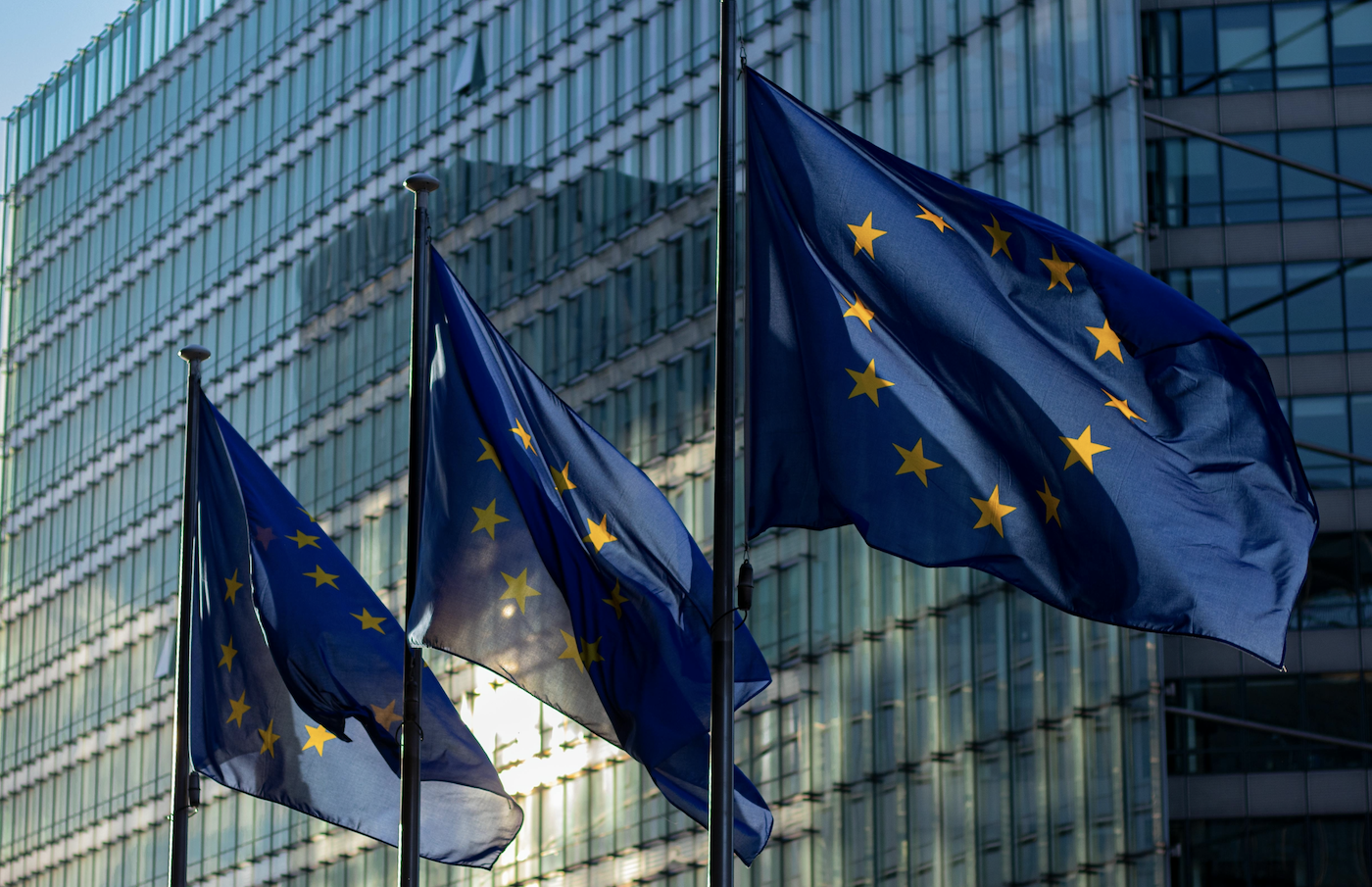
Photograph (cropped) by Marco via Pexels
Correction, August 21: This article has been edited to update Dr. Farsalinos’s affiliations.